You Wanted Better Writing. Now You Have It.
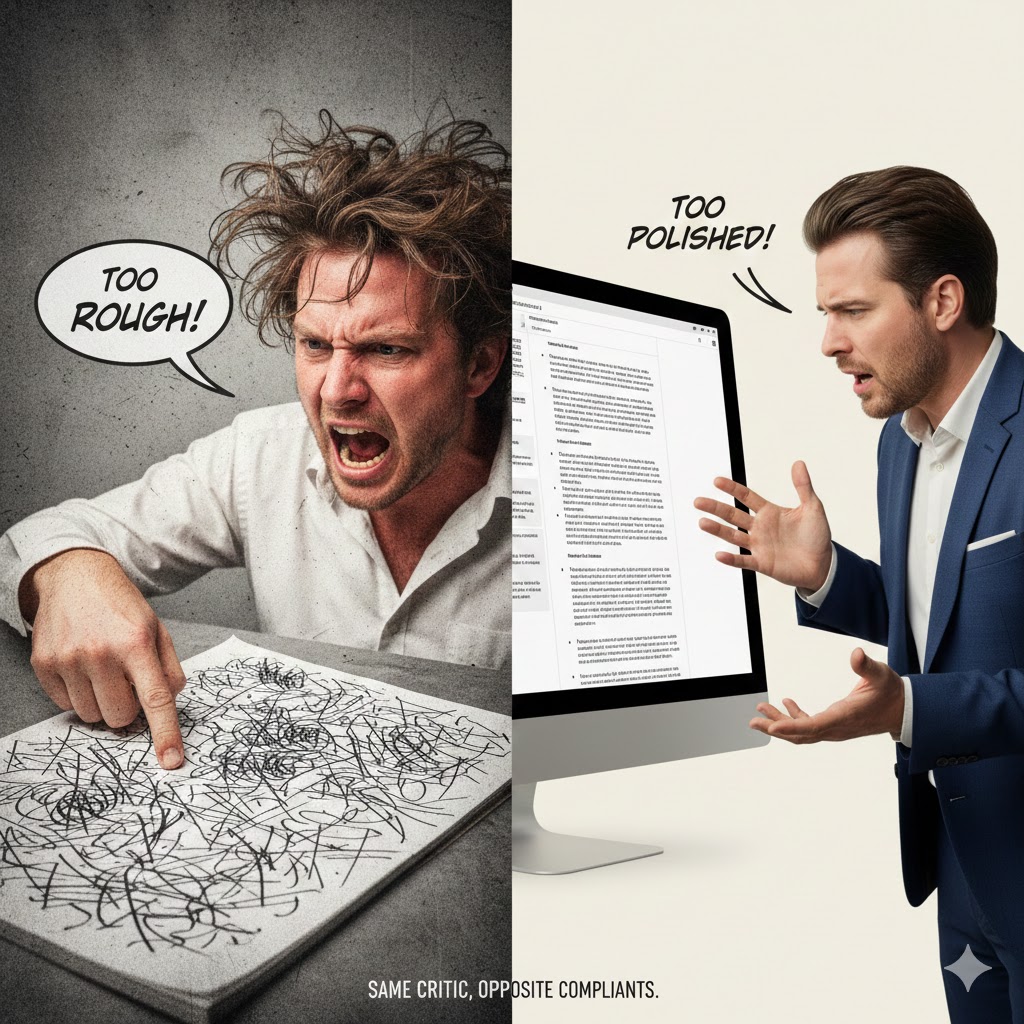
Same critic, opposite complaints.
In 2007, John Humphrys wrote in the Daily Mail that texters were "doing to our language what Genghis Khan did to his neighbours 800 years ago."
In 2008, Nicholas Carr asked in The Atlantic if Google was making us stupid. He mourned that he used to be "a scuba diver in the sea of words" but now "zips along the surface like a guy on a Jet Ski."
Mark Bauerlein literally called young people "The Dumbest Generation" because of how they communicated online.
The consensus was clear: technology was ruining writing. Twitter's character limits killed nuance. Texting destroyed grammar. Social media made everyone shallow.
Then researchers actually studied it.
Coventry University (2008): Kids who used more textisms had better literacy. A 2014 British longitudinal study found no negative impact on grammar development. Linguist David Crystal put it bluntly: "All the popular beliefs about texting are wrong."
The panic was wrong. It's usually wrong.
Fast Forward to Now
The complaint has flipped. Writing isn't too short anymore. It's too... polished? Too clean? "AI slop" used to mean low-effort garbage with factual errors. Now it means sentences that flow too well.
I submitted an article to Hacker News recently. A moderator responded, which almost never happens, and said the content was interesting. The kind of thing their audience would appreciate. But the style was the problem. Phrases like "Here's the part nobody talks about" flagged it as AI-assisted.
He was right. I used AI to help write it. The AI system I was writing about? I built that too. Eating my own dog food.
His suggestion: rewrite it in my own words so it sounds more human.
Think about that for a second.
For a decade, the criticism was that internet communication was too rough. Too casual. Lacking nuance and depth. Now the criticism is that AI-assisted writing is too smooth. Too structured. We finally have tools that help people write clearly, and the response is "make it worse so it feels authentic."
This Pattern Isn't New
In the 80s, musicians said synthesizers had no soul. "Anyone can press a button." The UK musicians' union literally campaigned against electronic instruments. Now electronic music dominates global charts.
When digital cameras emerged, photographers said it wasn't real photography. "You didn't learn darkroom techniques." "Anyone can take a thousand shots and get lucky." Now film is a niche hobby.
Designers said Canva users weren't real designers. "You're just picking templates." Meanwhile, businesses that couldn't afford any visual presence suddenly could communicate professionally.
The objection is always the same. It just wears different clothes.
"You didn't suffer the way I did, so you don't deserve the same status."
That's it. That's the whole thing.
If someone can do in 10 minutes what took you 10 years to learn, it threatens your identity. So you reframe it as a quality problem. "It's not that I'm gatekeeping, it's that the output lacks... soul. Authenticity. The human touch."
But notice the focus is always on how something was made, not what was made. If it were really about quality, we'd evaluate the output. Instead we interrogate the process. Did you struggle enough? Did you earn it?
The Acceptance Curve
Every democratizing tool follows the same pattern:
- "This will destroy the craft"
- "This is only for amateurs"
- "Okay, it's acceptable as an assist"
- "This is standard practice"
Spell check went through this. So did Grammarly. Digital cameras. Electronic music. Website builders. Template design tools.
AI writing is in phase one. Give it five years.
The Deepest Irony
The same communities that spent a decade complaining about internet communication being too shallow now complain that AI helps people write too well.
You wanted better writing. More complete thoughts. Clearer communication. Real sentences.
Now you have it. And you're mad about it.
Which suggests the complaint was never really about writing quality. It was about who gets to participate.